Forget everything you think you know about Ladakh.
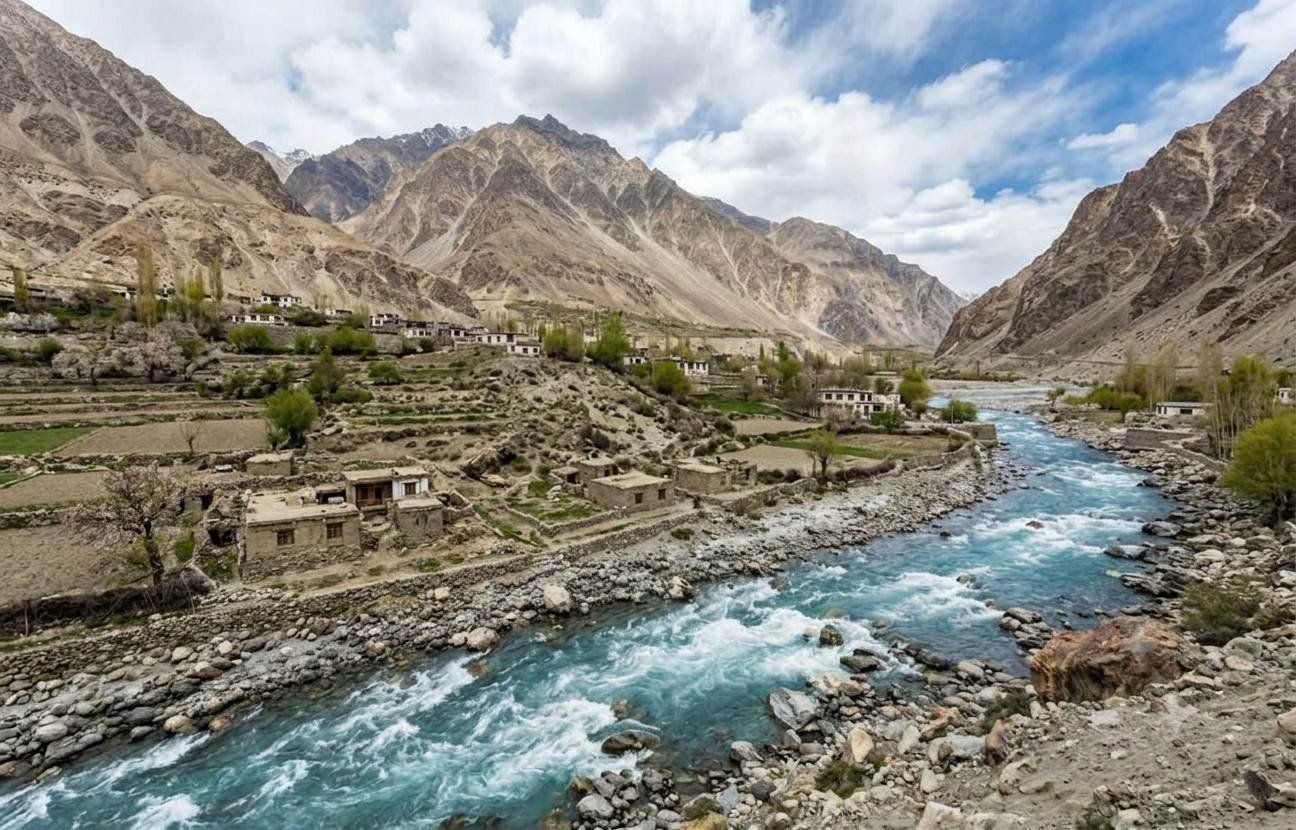
No barren brown mountains. No monasteries on every hilltop. Instead, I found apricot orchards, stone houses, a roaring river and a village where the call to prayer echoes against the Karakoram. Welcome to Turtuk village, the place that made me rethink what Ladakh really is.
The Secret Turtuk Keeps
Before we start exploring, let’s take a quick look at Turtuk’s past…
When I first explored Turtuk, I realised this little village in Ladakh was more than just beautiful mountains and apricot orchards. Every corner had a story, and its history made the place even more special.
Once part of Baltistan, Turtuk has a rich history shaped by the Yabgo dynasty and ancient trade routes. In 1971, during the Indo-Pak war, it came under Indian control. For many families, the change meant being separated from relatives across the border.
Even today, its history lives on through Balti culture, traditional houses and the old Yabgo family home, now a small museum.
Turtuk isn’t just a place to visit; it’s a place to experience. In this guide, I’ll share how to reach it, what to explore and why this offbeat village deserves a place on your travel list.
Why Explorers Fall in Love With Turtuk
- It’s still offbeat-There are no loud cafés or selfie queues here. In the mornings I heard the only sounds were water channels and a few children on their way to school, while the whole village slowly wake up around me.
- The landscape is unlike the rest of Ladakh-Instead of cold desert, you get terraced fields, apricot orchards and stone-and-wood houses with flat roofs, all under snow peaks.
- You’re standing near the edge of India-A short trip from the village takes you to a viewpoint near the border. Seeing the line you’ve only read about, with the mountains simply carrying on across it, is a quiet and humbling moment.
- It’s a photographer’s dream-The golden light on the fields in the late afternoon, the narrow lanes and the faces of the village elders all make the camera hard to put down
- slow travel-Turtuk is not a place to tick off in an hour. Stay overnight, walk everywhere and talk to people.
The Balti Way of Life
What made Turtuk feel special wasn’t just the scenery. It was the people.
The Balti community has its own language, food, clothing and traditions, closer to Baltistan and Central Asia than to the Buddhist culture most visitors see in the rest of Ladakh. Ladakh is known for monasteries, but here the skyline is shaped by mosques and orchards instead.
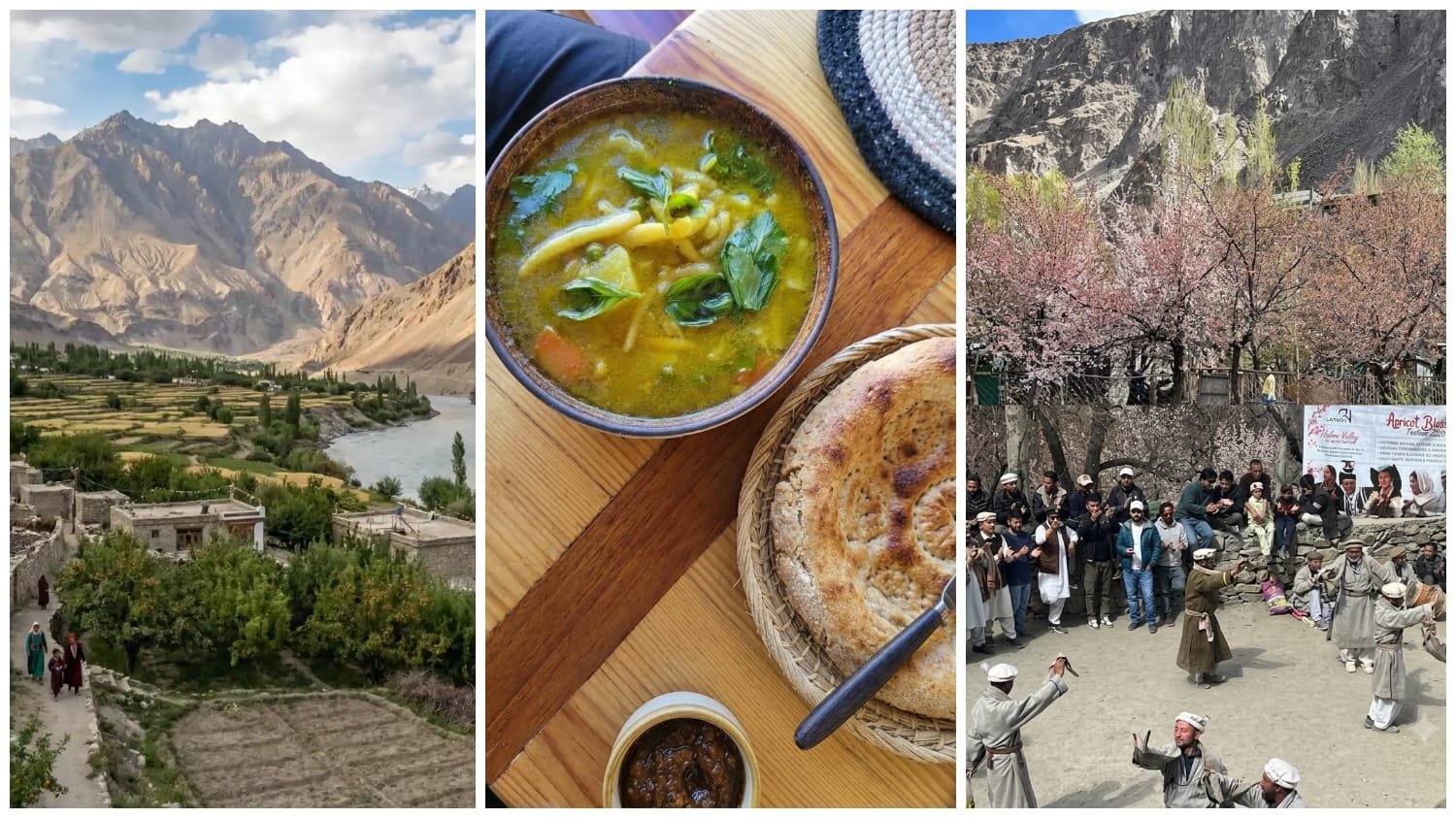
- Hospitality: I stayed in a family-run homestay where I got to experience the warmth of balti culture, their tradition, and the sweetest hospitality. Being invited into a home is the heart of a Turtuk trip.
- Food: Food in Turtuk is something you shouldn’t miss. Skip the usual momos and Maggi, and ask your homestay host for authentic Balti dishes instead. Start your morning with zan, a warm buckwheat pancake served with ghee, and try skyu, a hearty stew made with hand-pressed wheat dough and vegetables, which is perfect for the mountain chill. Apricots are everywhere here, so try them fresh, as jam or in pancakes, and warm up with a cup of yak butter tea. Before you leave, pick up some dried apricots and walnuts to take home.
- Heritage: Visit the small local heritage museum and the old Balti houses to see how people lived here for generations.
- Daily life: Farming, fruit drying and village gatherings still shape the day.
Turtuk Travel Guide
How to reach:
Turtuk is easy to reach once you’re in Leh, and almost everyone gets there by road.
Leh → Khardung La → Khalsar → Hunder → Diskit → Turtuk
You’ll cross one of the world’s highest motorable passes, so start early.
Permit:
An Inner Line Permit (for Indian citizens) or Protected Area Permit (for foreigners) is needed for Nubra and Turtuk. Rules change, so please check the latest requirements with the Leh administration or a registered travel agent before you go.
Where to stay:
Cozy Family-run homestays and small guesthouses are the best option. Book ahead in peak season (June-August).
Things to do:
- Walk through the village lanes and orchards
- Visit the heritage house and museum
- Go to the border viewpoint
- Sit by the Shyok River at sunset
- Try fresh apricots in season
Suggested itinerary:
- Day 1: Leh to Nubra via Khardung La, overnight at Hunder or Diskit
- Day 2: Drive to Turtuk, explore the village, evening walk
- Day 3: Morning in Turtuk, then return towards Diskit or Leh
Budget idea:
Homestays are affordable, and a 3-day trip can be done on a modes budget if you share a vehicle.
ExpenseDetails Cost (Approx.)
- Transport – Public bus Leh to Diskit, then bus Diskit to Turtuk (return) Rs 600-800
- Permit / fees– Environment fee, wildlife fee and optional Red Cross fee for 3 days – Rs 500
- Where to stay– Basic homestay or hostel, 2 nights at Rs 600-1,000 per night- Rs 1,200-2,000
- Meals– Homestay breakfast and dinner, plus a simple dhaba lunch, at Rs 150-200 per meal- Rs 600-900
- Extras– Snacks, dried apricots and walnuts to take home – Rs 300-500
- Total (2 nights) – Rs 3,200-4,700
Safety tips:
- Rest in Leh for 1-2 days first to acclimatise
- Carry cash, as ATMs and networks are limited
- Keep your ID and permit copies with you
- Carry warm layers, because nights are cold even in summer
A note on respectful travel
Always ask before photographing people, dress modestly, avoid leaving waste in the village and prefer local homestays over big outside operators. This keeps Turtuk beautiful for the next traveller.
Your Turtuk Story Begins Here
Turtuk isn’t a place you tick off a list. It’s a place you feel. It sits on the edge of the Shyok River, in the shadow of the Karakoram, and it carries a history that few other places in India can match. Its people welcome you like family and share their stories freely, and the whole village moves slowly enough that you finally have time to look around.
To my fellow travellers: come with curiosity, not a checklist. Walk the narrow lanes, sit with the locals over a cup of butter tea, and listen to the stories of a land that was once on the other side of a border. Respect the culture and the homes you visit, carry your waste back out, and leave the village as beautiful as you found it.
Turtuk will teach you that the best journeys aren’t about how far you go, but about how deeply you connect. So pack your bag, follow the road beyond Hunder, and let this little village in the Himalayas change the way you travel.
See you on the trail.
